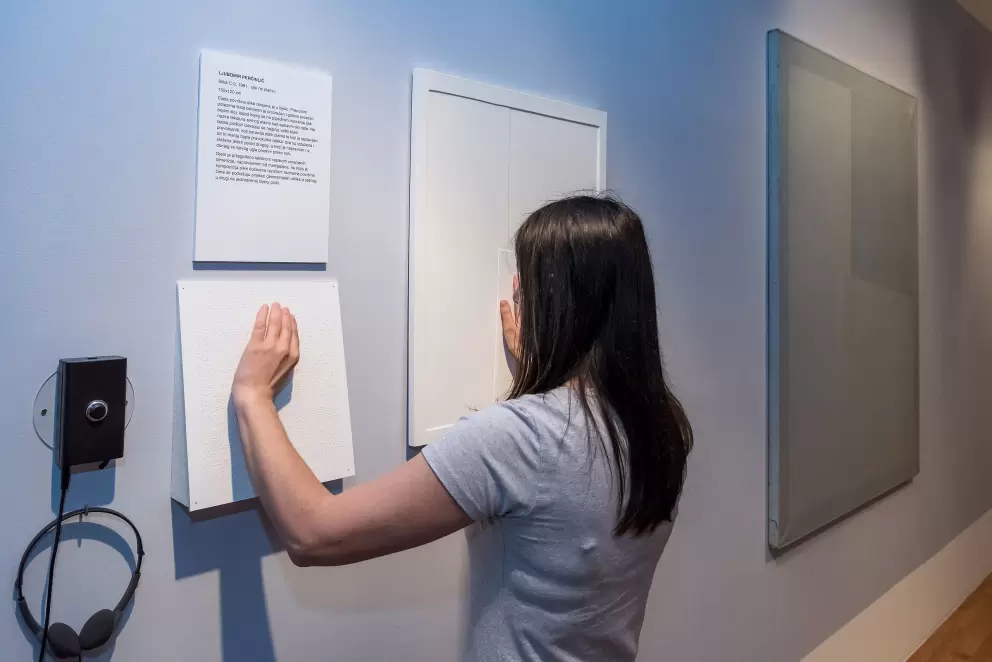
The Typhlological Museum is a specialized museum, and its name comes from the Greek words "typhlos" (blind person) and "logos" (narration, speech, thought, reason). The Museum is a public state institution which collects, stores, studies, documents, and communicates tangible and intangible materials related to people with disabilities, with an emphasis on the visually impaired.
With its activities the Museum endeavors to introduce the social community to the world of those who are visually impaired and, in this way, foster harmonious and tolerant relations between people, at the same time respecting the individuality of every person. The Museum is a place which enables people with disabilities to participate actively in its activities, and a place which simultaneously enables the social community to become familiar with the lives of disabled persons. It will act as a possible corrective mechanism in society since its activities will stimulate the community to correct and change possible negative perceptions about people with disabilities.
The Museum will achieve its goals by communicating with visitors and cooperating with museum institutions, related institutes, organizations, educational facilities – with all bodies that deal with disabilities both here and abroad.
Mission statement
The Typhlological Museum is a specialized museum, and its name comes from the Greek words "typhlos" (blind person) and "logos" (narration, speech, thought, reason). The Museum is a public state institution which collects, stores, studies, documents, and communicates tangible and intangible materials related to people with disabilities, with an emphasis on the visually impaired.
With its activities the Museum endeavors to introduce the social community to the world of those who are visually impaired and, in this way, foster harmonious and tolerant relations between people, at the same time respecting the individuality of every person. The Museum is a place which enables people with disabilities to participate actively in its activities, and a place which simultaneously enables the social community to become familiar with the lives of disabled persons. It will act as a possible corrective mechanism in society since its activities will stimulate the community to correct and change possible negative perceptions about people with disabilities.
The Museum will achieve its goals by communicating with visitors and cooperating with museum institutions, related institutes, organizations, educational facilities – with all bodies that deal with disabilities both here and abroad.