Vinko Bek
Bukevje, 1889
paper, Braille print
the gift of the Institution for the Education of Blind Children, 1954
inv. no.: 453
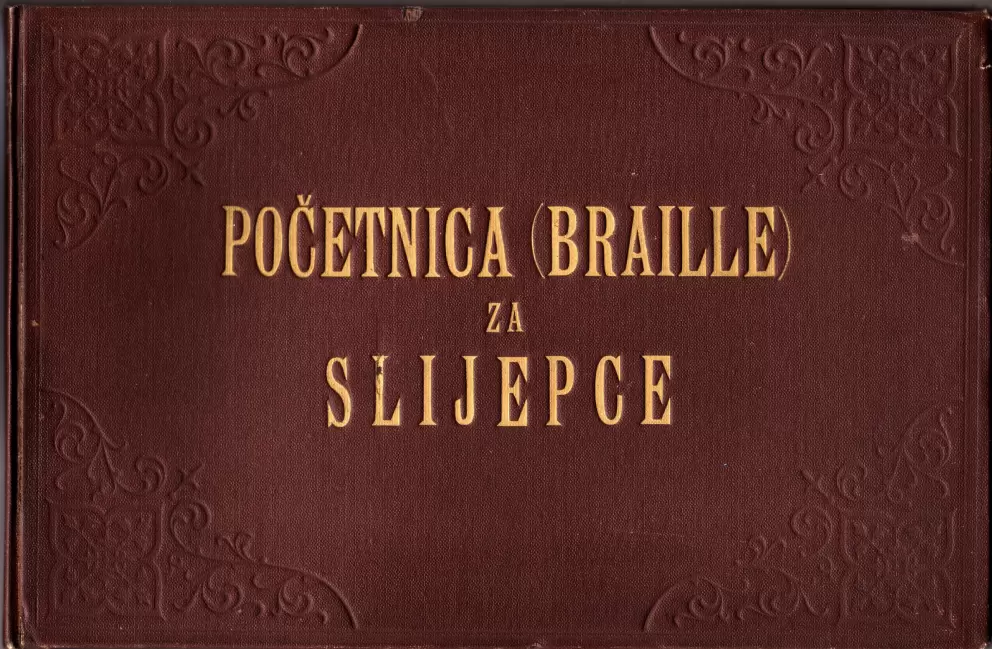
This is the first Braille primer which Bek created in 1889. The book has ten sheets of paper, seven of which have printed text on both sides. It was used for the basic training in Braille. In the creation of this textbook Bek, rejected the German method of mechanical learning of the alphabet and meaningless syllables. He introduced the analysis of individual letters based on the principle of simplicity and composing meaningful syllables out of the letters learned. In his article titled Teaching Blind Children to Read and Write, in the journal Progress (Napredak) in 1889, Bek explained his reasons for abandoning the German method, which methods he used, and what his guidelines were in the process of introducing blind children to literacy.
Primer for the blind
Vinko Bek
Bukevje, 1889
paper, Braille print
the gift of the Institution for the Education of Blind Children, 1954
inv. no.: 453
This is the first Braille primer which Bek created in 1889. The book has ten sheets of paper, seven of which have printed text on both sides. It was used for the basic training in Braille. In the creation of this textbook Bek, rejected the German method of mechanical learning of the alphabet and meaningless syllables. He introduced the analysis of individual letters based on the principle of simplicity and composing meaningful syllables out of the letters learned. In his article titled Teaching Blind Children to Read and Write, in the journal Progress (Napredak) in 1889, Bek explained his reasons for abandoning the German method, which methods he used, and what his guidelines were in the process of introducing blind children to literacy.