London, mid-20th century
wood, metal
inv. no.: 218
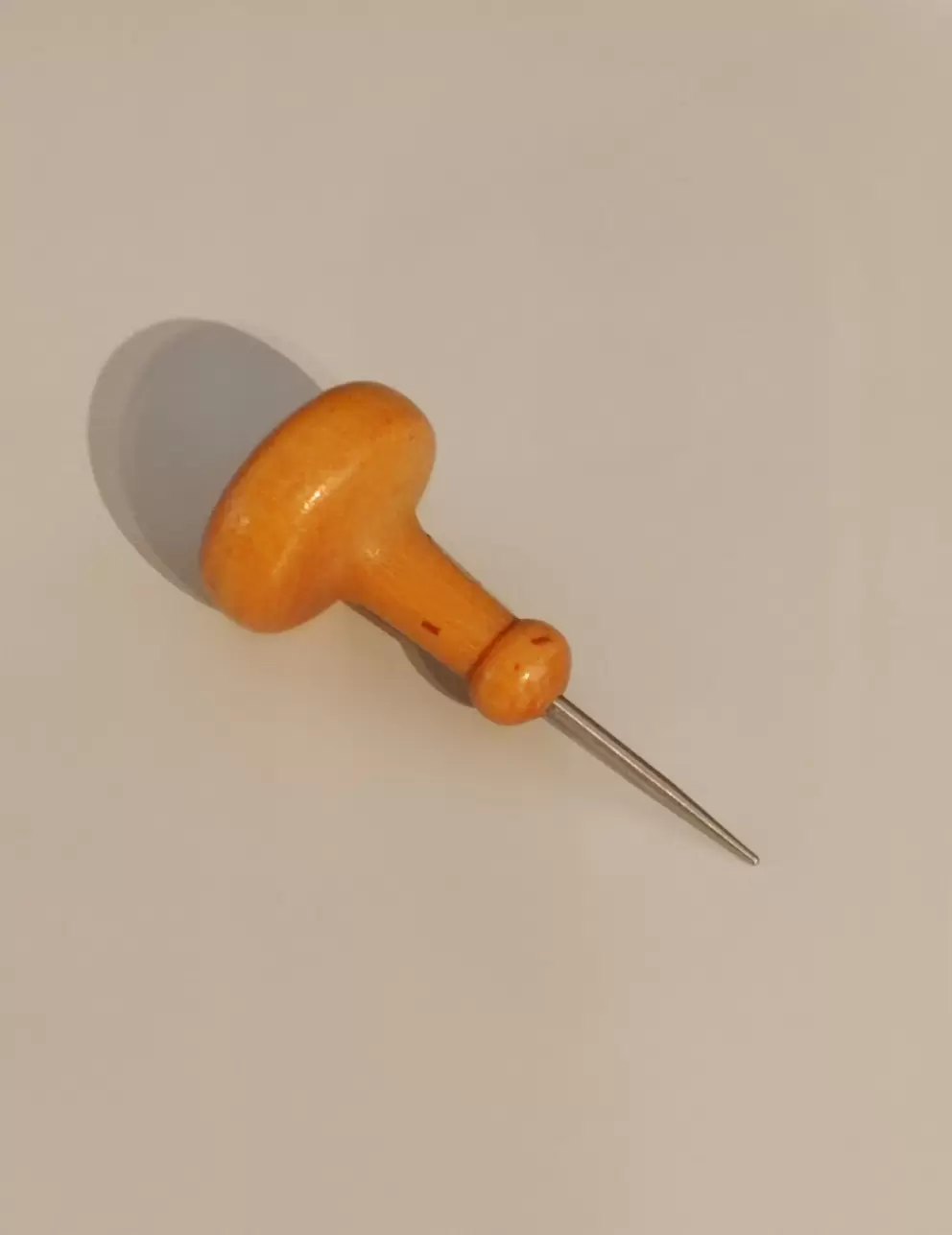
Next to the Prague writing slate, a stylus is exhibited, a tool used for writing in Braille. This particular stylus was made in London in the mid-20th century and consists of two main parts: a wooden handle and a metal tip. The wooden part is held like a pencil, while the metal end is used to emboss the raised dots onto the writing board, forming Braille characters.
Despite advances in technology, the basic function and design of the stylus have remained largely unchanged since the creation of the first Braille writing aids. It remains an essential tool for writing Braille, allowing for precise and tactile communication for the blind.
Stylus
London, mid-20th century
wood, metal
inv. no.: 218
Next to the Prague writing slate, a stylus is exhibited, a tool used for writing in Braille. This particular stylus was made in London in the mid-20th century and consists of two main parts: a wooden handle and a metal tip. The wooden part is held like a pencil, while the metal end is used to emboss the raised dots onto the writing board, forming Braille characters.
Despite advances in technology, the basic function and design of the stylus have remained largely unchanged since the creation of the first Braille writing aids. It remains an essential tool for writing Braille, allowing for precise and tactile communication for the blind.