Development of the script for the blind
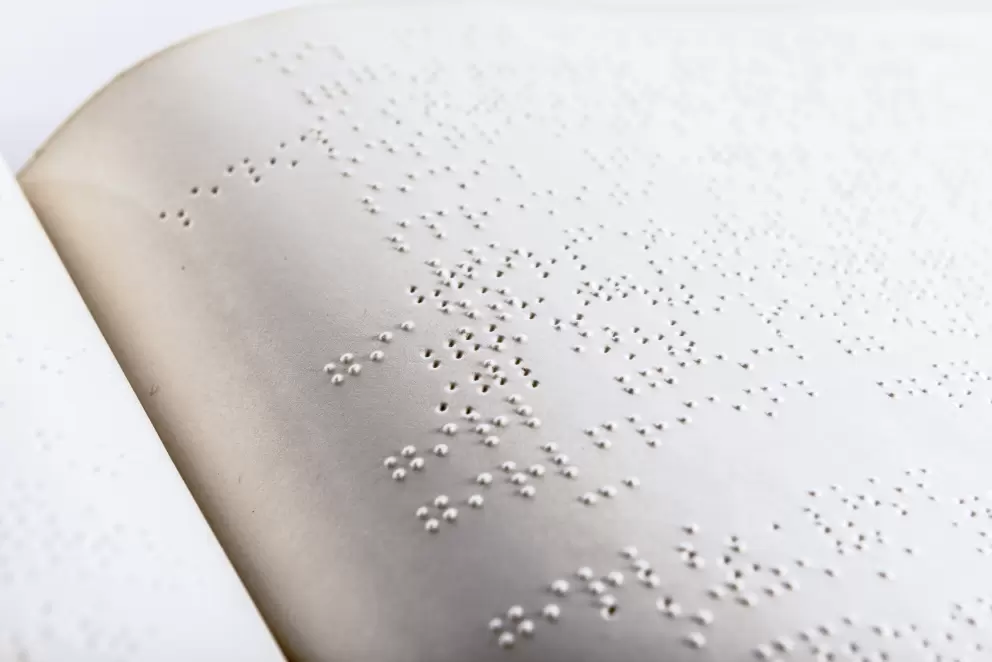
This section traces the development of writing systems for the blind, from oral traditions to the creation of Braille. Throughout history, there were various attempts to create writing systems for the blind, but none managed to last or flourish because there were no schools where these scripts could be learned and refined. It was only with the establishment of the first institutions for the blind that a foundation for the systematic development of their writing was laid, leading to the creation of several systems at the end of the 18th and beginning of the 19th century in institutes where blind people were educated.
In Europe, several writing systems for the blind were used simultaneously. In France, there was the raised line writing; in Germanic countries, needle writing; and in England, the Moon type. The basic criterion for designing a writing system for the blind was that it should resemble the writing system used by sighted people as closely as possible.
It was in this European environment that the blind boy Louis Braille grew up — a boy who would change the world of the blind. He was educated using raised line writing at the Institute for the Blind in Paris and quickly noticed its shortcomings. For this reason, he systematically worked on developing his own writing system, which was conceived in 1825. This was Braille, a system that blind people accepted as their own and which is now used worldwide.
Development of the script for the blind
This section traces the development of writing systems for the blind, from oral traditions to the creation of Braille. Throughout history, there were various attempts to create writing systems for the blind, but none managed to last or flourish because there were no schools where these scripts could be learned and refined. It was only with the establishment of the first institutions for the blind that a foundation for the systematic development of their writing was laid, leading to the creation of several systems at the end of the 18th and beginning of the 19th century in institutes where blind people were educated.
In Europe, several writing systems for the blind were used simultaneously. In France, there was the raised line writing; in Germanic countries, needle writing; and in England, the Moon type. The basic criterion for designing a writing system for the blind was that it should resemble the writing system used by sighted people as closely as possible.
It was in this European environment that the blind boy Louis Braille grew up — a boy who would change the world of the blind. He was educated using raised line writing at the Institute for the Blind in Paris and quickly noticed its shortcomings. For this reason, he systematically worked on developing his own writing system, which was conceived in 1825. This was Braille, a system that blind people accepted as their own and which is now used worldwide.