National Institute for the Blind
London, 1950
paper, Moon print
the gift of the Institute for the Education of Blind Children in Zagreb, 1954
inv. no.: 658
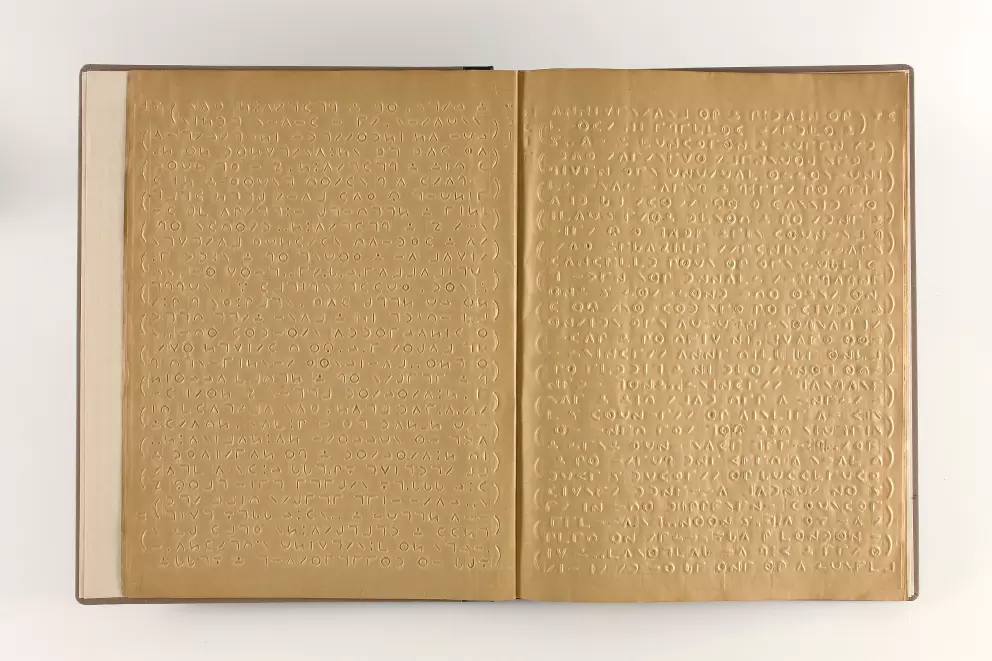
The magazine was printed in Moon type at the National Institute for the Blind in London in 1950. It was donated to the Tyflological Museum in 1954 by the Institute for the Education of Blind Children in Zagreb.
Blind teacher William Moon, while teaching a five-year-old blind boy, developed his own alphabet, known as Moon type, which consisted of six simplified shapes resembling Latin letters, such as a dot, circle, semicircle, short and long lines.
The first book in Moon type was printed in 1847. This writing system gained significant success in English-speaking countries and remained in use for a long time, especially among people who became blind later in life and older individuals.
Moon magazine
National Institute for the Blind
London, 1950
paper, Moon print
the gift of the Institute for the Education of Blind Children in Zagreb, 1954
inv. no.: 658
The magazine was printed in Moon type at the National Institute for the Blind in London in 1950. It was donated to the Tyflological Museum in 1954 by the Institute for the Education of Blind Children in Zagreb.
Blind teacher William Moon, while teaching a five-year-old blind boy, developed his own alphabet, known as Moon type, which consisted of six simplified shapes resembling Latin letters, such as a dot, circle, semicircle, short and long lines.
The first book in Moon type was printed in 1847. This writing system gained significant success in English-speaking countries and remained in use for a long time, especially among people who became blind later in life and older individuals.